

Paws IQ: The Crate Confidence Guide
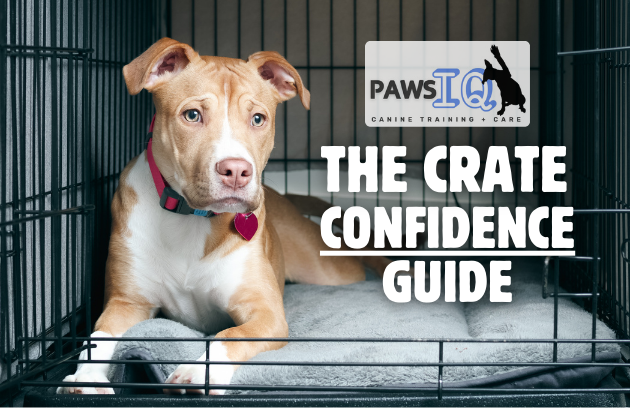
The crate isn’t a punishment or a “jail cell.” To a dog, it’s a den — a safe, quiet place where their nervous system can rest. When introduced with calm, neutral confidence, the crate becomes a tool for structure, rest, and trust.
This guide shows you how to introduce the crate in a way that builds confidence instead of anxiety and conflict.
1. SETTING THE RIGHT ENERGY
Dogs take their cues from your tone, pace, and attitude. If you approach the crate like it’s a dramatic, tear-jerking moment — your dog will, too.
What to Do
Bring your dog to the crate calmly, without coaxing or emotional hype.
Keep your voice neutral — no high-pitched “it’s okay, sweetie.”
Move slowly, breathe evenly, and let your dog read your steadiness.
🐕 Dog Psychology Note
Your dog doesn’t need reassurance; they need leadership and a modeled reassurance that everything is cool. Calmness creates clarity. If you act weird about it, they’ll act weird about it.
2. INTRODUCING THE CRATE
Your dog should enter the crate because you guide and direct them, not because you beg or convince them with bribes. Keep the process simple and predictable.
How to Start
Open the crate door and stand slightly to the side.
Use gentle leash guidance if needed — no pulling, just direction.
Once inside, close the door calmly without rushing.
No need for an emotional departure. Walk away like it’s no big deal.
How Long to Start With
5–10 minutes at a time.
Gradually increase duration as your dog settles.
Treats or chews are optional — not necessary.
🐕 Dog Psychology Note
Dogs build confidence through repetition and neutrality, not excitement.
3. HANDLING WHINING, BARKING, OR PROTESTING
This is where most owners unintentionally create more anxiety by reacting emotionally.
What to Do
Ignore whining or barking — any response reinforces it.
Wait for a moment of quiet before opening the door.
Keep the door closed until your dog is mentally settled.
What Not to Do
Don’t talk through the crate door.
Don’t open the door during noise.
Don’t feel guilty — calm structure is kindness.
🐕 Dog Psychology Note
Releasing during noise teaches the dog “chaos opens doors.”
Releasing during calm teaches “calm earns freedom.”
4. THE CRATE AS PART OF DAILY STRUCTURE
The crate works best when it’s part of a consistent routine, not a last resort.
Use the Crate:
After walks
During rest periods
While cooking, eating, or when guests arrive
For decompression after overstimulation
Overnight
Avoid Using the Crate:
Only when you leave the house
Only when the dog is misbehaving
🐕 Dog Psychology Note
Balanced dogs cycle between work, play, and rest — and they tend to stay in neutral (rest) 12-16 hours per day.
The crate helps support the rest portion of their lives.
5. RELEASING FROM THE CRATE
Most crate issues happen after the door opens, not before.
What to Do
Wait for your dog to be calm before opening the door. This may be a 2-minute adventure sometimes.
Open it slowly — no big gestures or excited mannerisms.
Block the exit with your body if they try to bolt.
Once calm, release with a clear but neutral cue.
🐕 Dog Psychology Note
A calm release sets the tone for the next activity. Rushing out the door is a mindset problem, not a speed issue.
CLOSING
A confident dog is shaped through slow, steady routines and clear leadership. The crate is one of the simplest ways to build trust and stability in your dog’s daily life.
With consistent practice, the crate becomes a place your dog chooses, not avoids.
And according to Moose, it’s also a great location for power naps and avoiding responsibility.