

Paws IQ: The Calm Walk Guide
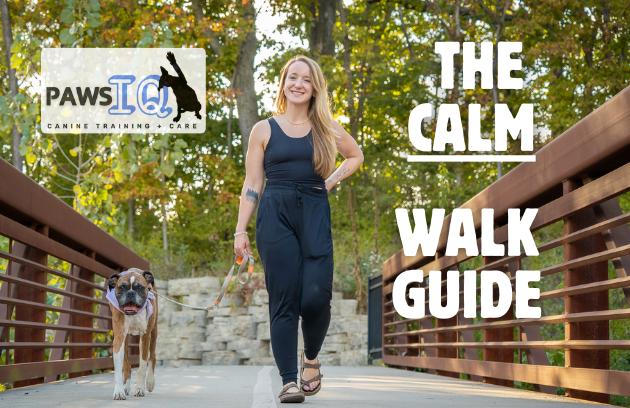
A calm walk isn’t about distance, exhaustion, or “just getting energy out.” It’s about creating a mindset proactively through repetition, so that your dog learns to integrate it. When you leave the house with a dog who is mentally settled and following your lead, the walk becomes something entirely different — structured, peaceful, and connected.
At Paws IQ, we approach walking with the same principles we use everywhere else: calm energy, clear communication, and confident leadership. Dogs don’t learn from tension or hype. They learn from the steadiness you mirror. This guide shows you how to bring that steadiness to the leash.
1. IT STARTS BEFORE THE WALK
The walk begins long before the door opens. If your dog is spinning, barking, whining, or pacing while you grab the leash… that’s the moment to p a u s e and slow everything down.
What to Do
Pick up the leash calmly, without excitement.
Wait for your dog to settle before putting on the slip lead.
If they pop back into excitement, pause and wait again. Try to disengage from eye contact or energetic ‘pressure’, as this makes it harder for them to hold your command.
Move to the door only when their brain is in neutral. You’ll usually see a softening in their expression or a mild ‘slouch’ in their stance.
🐕 Dog Psychology Note
Dogs don’t follow emotion — they follow stability. Your frustration isn’t going to settle them, but your calm authority will.
The more you slow down and integrate this energy in the beginning, the easier the rest of the walk will be.
2. USING THE SLIP LEAD CORRECTLY
A slip lead is a communication line. It gives clear direction without pressure when used properly.
How to Fit It
Slip it high on the neck, just behind the ears.
The stopper should keep it from sliding down. It should look just a little tight, but you should be able to comfortably slide two fingers under the neck loop.
Hold the leash with one hand for guidance, the other relaxed at your side.
Your Energy Matters
The slip lead works best when you are calm, shoulders loose, with your walk-pace steady.
If you’re tense, your dog picks up on it instantly — and will tend to contract or collapse in reflection of the energy you’re sending his way.
Alternatively, if you’re centered, they eagerly and peacefully fall in-tune with only minor and occasional adjustments.
3. ADVOCATE FOR YOUR DOG
Part of a calm walk is protecting your dog's space. Not every dog wants strangers rushing up or other dogs charging toward them. Advocacy is leadership — you should be the one to decide what gets close.
What to Do
Place yourself between your dog and triggers. A simple step forward or leg in front of your dog says, “I’ve got this.”
Don’t allow surprise greetings. A calm “No thank you we’re training right now” is enough.
Give space around excited or unstable dogs. Be proactive. Choose distance before tension is created.
Skip greetings if your dog feels unsure. Confidence in you grows when they see you managing the environment.
🐕 Dog Psychology Note
Dogs can relax when they know you’re protecting their bubble. That bubble will vary depending on the dog (and sometimes the day). Advocacy builds trust and keeps their nervous system balanced on the walk.
4. THE WALK ITSELF: CLARITY, NOT TENSION
Your dog should walk beside or slightly behind you — not in front, constantly at tension, leading the charge.
To Prevent Pulling
Keep a short but relaxed leash — not tight and not loosely dangling.
If your dog forges ahead, stop. Don’t talk. Don’t tug.
Wait for them to return to a calm position.
Continue walking only when the mind is back in neutral.
To Stop Zig-Zagging or Sniff-Chaos
Change direction before they hit the end of the leash.
Stay predictable: slow turns, calm steps.
Sniffing becomes a privilege you allow, not a right the dog takes.
To Manage Reactivity
Increase space before the dog reacts.
Keep your breathing slow, shoulders soft.
Move in a smooth arc around triggers, not straight at them.
Your neutrality tells your dog there is nothing to “handle.”
Put yourself between the dog and the trigger.
To Fix Lagging or Falling Behind
Slow your pace slightly.
Give a gentle forward cue on the leash, then release.
Keep moving — confidence comes from momentum.
5. ENDING THE WALK WITH THE SAME CALM YOU STARTED WITH
When you return home, don’t let the energy spike again.
What to Do
Have your dog sit or stand calmly as you remove the slip lead.
No racing into the house.
No “we’re home!” excitement from you.
Just neutral, quiet transitions.
🐕 Dog Psychology Note
The walk should begin calm, stay calm, and end calm. Consistency teaches your dog that you’re the leader before, during, and after.
Final Thoughts
A calm walk isn’t a skill your dog learns — it’s a rhythm you both fall into when you lead with clarity. When your energy is steady and your expectations are simple, your dog’s mind naturally settles into place.
Walks don’t have to be a battle. With calm confidence and clear communication, they become one of the easiest and most enjoyable parts of your day together.